
Australian Partner Visa: Subclass 820 vs 309 Explained
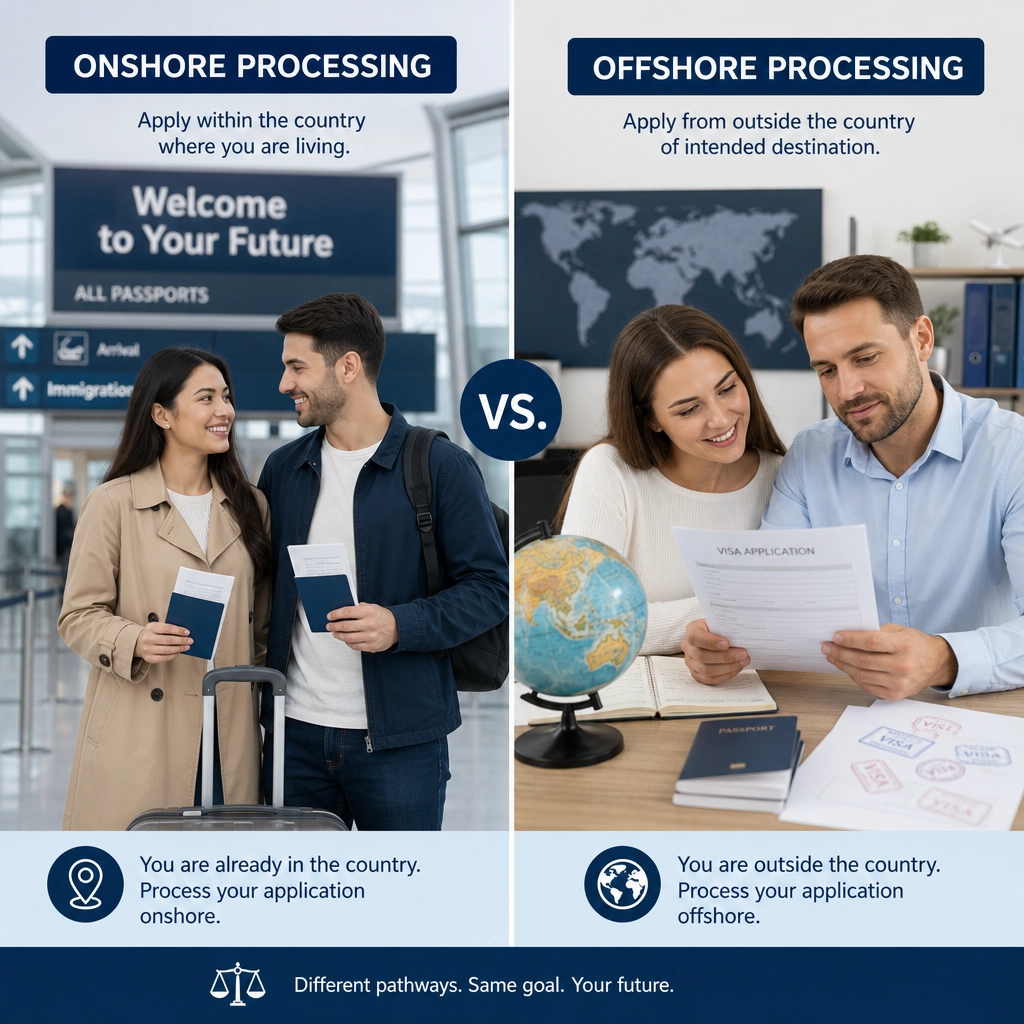
Most couples applying for an Australian partner visa discover the onshore versus offshore distinction only after they have already made decisions that are difficult to reverse. Choosing the wrong pathway delays reunification by months, sometimes years, and in some cases triggers a section 48 bar that locks an applicant out of onshore options entirely. The Department of Home Affairs processed over 40,500 partner visa applications in the 2025-26 program year, and processing times for the temporary stage alone stretched beyond 20 months for many applicants. Understanding the structural differences between Subclass 820 and Subclass 309 before you lodge is not a nice-to-have. It is the decision that shapes every document, every timeline, and every dollar you spend.
Table of Contents
- What Is the Australian Partner Visa?
- Subclass 820: The Onshore Partner Visa
- Subclass 309: The Offshore Partner Visa
- Key Differences at a Glance
- Eligibility Requirements That Catch Applicants Off Guard
- What Happens After the Temporary Visa Is Granted
- The Evidence That Makes or Breaks Your Application
- Cost and Processing Time Comparison
- Common Mistakes and How to Avoid Them
- Frequently Asked Questions
Quick Takeaways
| Key Insight | Explanation |
|---|---|
| Location at time of lodgement determines your subclass | Subclass 820 requires you to be in Australia when you apply and when the visa is decided. Subclass 309 requires you to be outside Australia when you apply and in or outside Australia when the visa is decided. |
| Both pathways lead to the same permanent visa | Subclass 820 progresses to Subclass 801, and Subclass 309 progresses to Subclass 100. The permanent stage eligibility assessment is functionally identical. |
| The section 48 bar can force you offshore | If you previously held a visa that was refused or cancelled while in Australia, section 48 of the Migration Act may prevent you from applying onshore regardless of relationship evidence. |
| Bridging Visa A is a critical benefit of Subclass 820 | Onshore applicants receive a Bridging Visa A upon lodgement, allowing them to remain lawfully in Australia while the application is processed. Offshore applicants have no equivalent protection. |
| Processing times are not controlled by which subclass you choose | Both onshore and offshore partner visa queues have experienced processing times exceeding 20 months at the temporary stage. Neither pathway is reliably faster. |
| De facto relationships require 12 months of cohabitation evidence | Unless a registered relationship is in place, de facto couples must demonstrate 12 continuous months of living together before lodging either subclass. |
| The sponsor must be an Australian citizen, permanent resident, or eligible NZ citizen | The sponsoring partner’s visa status directly affects eligibility. Temporary visa holders cannot sponsor a partner visa applicant. |
What Is the Australian Partner Visa?
The Australian partner visa is a two-stage immigration pathway that allows the spouse or de facto partner of an Australian citizen, permanent resident, or eligible New Zealand citizen to live and work in Australia. The visa is structured so that applicants first receive a temporary visa, then progress to a permanent visa after the relationship is assessed again, typically two years after the initial application was lodged.
There is no single “partner visa.” The subclass you apply for depends entirely on where you are physically located when your application is lodged. This is not a matter of preference. It is a legal requirement with serious consequences if ignored.
In practice, the Australian partner visa system assesses four categories of evidence: financial aspects of the relationship, nature of the household, social aspects of the relationship, and commitment of the couple to each other. Every application, regardless of subclass, is assessed against these same four categories. The difference between Subclass 820 and 309 is not about the strength of the relationship required. It is about where the applicant sits geographically.
Subclass 820: The Onshore Partner Visa
The Subclass 820 visa, formally called the Partner (Temporary) visa, is for applicants who are in Australia at the time of lodgment and intend to remain in Australia throughout the processing period. It is lodged simultaneously with the Subclass 801 (Partner Permanent) application, meaning you pay one application fee and submit one set of documents that covers both stages.
Bridging Visa A Protection
The single most important practical benefit of the onshore pathway is the Bridging Visa A. As soon as a valid Subclass 820 application is lodged, a Bridging Visa A is triggered automatically. This means the applicant can remain lawfully in Australia even if their substantive visa expires during the processing period, which commonly lasts 20 to 28 months at the temporary stage.
Without a Bridging Visa A, the applicant would be required to leave Australia or face unlawful status. This is not a minor administrative point. It is the reason most couples in Australia choose the 820 pathway regardless of any perceived processing time advantage offshore.
Work and Study Rights During Processing
The Bridging Visa A generally allows the holder to work full-time and study in Australia while waiting for the Subclass 820 to be decided. However, if the applicant’s previous visa had work restrictions, those restrictions may carry over to the Bridging Visa A. A common mistake is assuming that a Bridging Visa A automatically lifts any work limitations that existed on the previous visa. It does not. The actual conditions must be checked in the BVA grant letter and in VEVO
Pro tip: If you are currently on a student visa with work-hour restrictions and you lodge a Subclass 820 application, confirm with your registered migration agent whether the Bridging Visa A you receive will lift or inherit those restrictions. The answer depends on how the Bridging Visa A is granted and whether a condition 8101 was attached to your previous visa.
Subclass 309: The Offshore Partner Visa
The Subclass 309 visa, formally called the Partner (Provisional) visa, is for applicants who are outside Australia at the time of lodgement. It is lodged simultaneously with the Subclass 100 (Partner Permanent) application, following the same dual-stage logic as the onshore pathway.
A critical point that many applicants miss: the “offshore” requirement applies at the time of lodgement, but it is no longer applied in the same rigid way at the time of grant. The applicant must be outside Australia when the 309/100 partner visa application is lodged. After lodgement, many applicants can travel to Australia on an appropriate temporary visa and remain lawful during processing without automatically preventing the grant of the Subclass 309 simply because they are in Australia.
Visitor Visa Travel While Subclass 309 Is Pending
Offshore applicants often ask whether they can visit Australia while waiting for their Subclass 309 to be decided. The answer is yes, it is generally possible, provided you are granted an appropriate visitor visa (or eVisitor) and you remain lawful in Australia while you are here. Under the current framework, the Department can grant a Subclass 309 whether you are in or outside Australia at the time of decision, so there is no longer a blanket rule that you “must depart before the 309 is granted.” However, decisions can still be made with little or no advance warning, and any period of unlawful stay or breach of visitor‑visa conditions can cause serious complications for your partner visa.
In practice, the safest approach for offshore applicants who want to visit their sponsoring partner in Australia is to use the correct visitor visa, obey all conditions (including no work), keep a clear travel record, and plan their trips with the expectation that the 309 could be decided at any time, rather than relying on having weeks of notice in advance.
Key Differences at a Glance
The table below summarises the structural differences between the two pathways. These are not matters of opinion. They are defined by the Migration Regulations 1994 and the Migration Act 1958.
| Feature | Subclass 820 (Onshore) | Subclass 309 (Offshore) |
|---|---|---|
| Where applicant must be at lodgment | In Australia | Outside Australia |
| Where applicant must be at visa grant | In Australia | In or Outside Australia |
| Bridging visa protection | Yes, Bridging Visa A granted on lodgment | No bridging visa available |
| Permanent stage visa | Subclass 801 | Subclass 100 |
| Can travel to Australia while pending | Yes, already in Australia | Yes, on substantive visa |
| Section 48 bar applies | Yes, can prevent onshore lodgement | No, offshore applications not barred by section 48 |
| Application fee (as at 2026) | AUD 11,710 (main applicant) | AUD 11,710 (main applicant) |
Eligibility Requirements That Catch Applicants Off Guard
The eligibility requirements for both subclasses are largely the same. What differs is the legal barrier created by prior visa history and the de facto cohabitation requirement that many couples fail to satisfy at the time of lodgement.
The De Facto 12-Month Rule
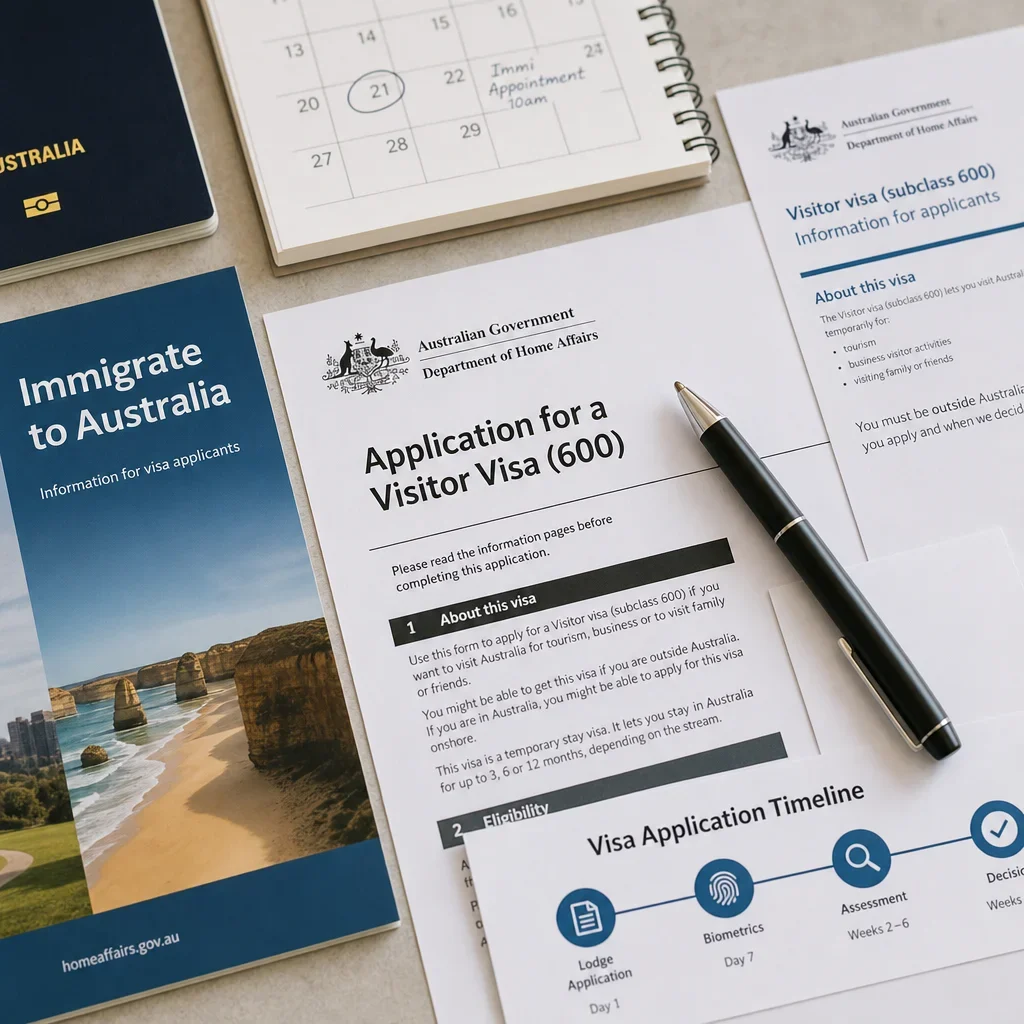
For married couples, lodgement is possible from the date of marriage. For de facto couples, the Migration Regulations require that the couple have lived together in a genuine de facto relationship for at least 12 continuous months immediately before lodging the application, unless the couple is in a registered relationship under a law of a state or territory in Australia.
A common mistake is miscounting this period. The 12 months must be continuous. Brief separations for travel, work, or family obligations may interrupt the count depending on how they are documented. The Department looks at whether the couple was genuinely living together in a shared household, not merely whether they were in a romantic relationship.
Section 48 Bar for Onshore Applicants
Section 48 of the Migration Act prevents a person from applying for most visas while in Australia if they have previously had a visa refused or cancelled (other than on character grounds) while they were in Australia. The partner visa is one of the few visas exempt from this bar, but only if the applicant meets certain conditions, including that the relationship was genuine at the time of the previous refusal. This is a complex legal question that requires professional assessment. Applying onshore without checking section 48 exposure is one of the most expensive mistakes a partner visa applicant can make.
“The partner visa system rewards couples who understand its structure before they apply. The most common cause of refusal is not a weak relationship. It is an application that was lodged at the wrong time, in the wrong place, or without the evidence categories properly addressed.”
What Happens After the Temporary Visa Is Granted
When either the Subclass 820 or Subclass 309 is granted, the applicant can live, work, and study in Australia. This is the temporary stage. The permanent visa, either Subclass 801 or Subclass 100, is assessed separately, generally two years after the original application was lodged, not two years after the temporary visa was granted.
At the permanent stage, the Department will request updated evidence that the relationship is still genuine and ongoing. If the relationship has ended, the permanent visa will generally be refused. If the sponsor dies between the temporary and permanent stages, a special provision under regulation 1.15A may still allow the permanent visa to be granted, depending on the circumstances.
Exceptions to the Two-Year Wait
Couples who have been in a genuine relationship for at least three years before lodging, or who have a dependent child together, may be assessed for the permanent visa without waiting the full two years. This exception is not automatic. The Department must be satisfied that the evidence supports immediate permanent consideration.
Pro tip: If you have been in a relationship for more than three years or have a child together, flag this clearly in your initial application. Couples who meet this exception frequently miss it because they assume the two-year wait is mandatory. TerraOz Migration routinely identifies this opportunity during initial consultations, often saving clients a year or more of waiting for permanent residence.
The Evidence That Makes or Breaks Your Application
The Department assesses relationship genuineness across four mandatory categories. Every application, onshore or offshore, must address all four. A strong application does not simply tick each box. It tells a coherent story across all four categories simultaneously.
Financial Aspects of the Relationship
Joint bank accounts, shared financial obligations, joint property ownership or rental agreements, and insurance policies that name the partner as a beneficiary are all strong evidence. The Department looks for evidence of genuine financial interdependence, not just proximity. A couple who have been together for five years but maintain entirely separate finances will face harder scrutiny than a couple who have been together for two years but have merged their financial lives.
Nature of the Household
Evidence of a shared household includes a joint lease or mortgage, utility bills in both names, evidence of shared domestic responsibilities, and statutory declarations from people who have visited the home. Couples living in separate dwellings during part of the relationship must explain why and document that the relationship was still ongoing despite the separation.
Social Aspects of the Relationship
This category covers how the couple presents their relationship to the world. Joint social media accounts, photographs together over time, invitations to events in both names, and knowledge of each other’s family and social networks all matter. Statutory declarations from friends and family members who know the couple together are among the most persuasive documents in this category.
Commitment to Each Other
Evidence of commitment includes knowledge of each other’s personal circumstances, future plans discussed in writing, correspondence during periods of separation, and any formal steps taken to formalise the relationship such as marriage or registration. The Department is specifically looking for evidence that the couple considers their relationship to be long-term and exclusive.
Cost and Processing Time Comparison
The application fee for both the onshore and offshore partner visa pathways is the same: AUD 11,710 for the main applicant as at 2026. Additional applicants included in the application, such as dependent children, attract additional fees. There is no fee advantage to choosing one pathway over the other.
Processing times, however, are a more complex picture. According to the Department of Home Affairs’ published processing time data, both the Subclass 820 and Subclass 309 temporary stage applications have consistently required between 16 to 27 months for 50-90% of applications in the 2025-26 program year. The data consistently shows that neither pathway is materially faster than the other, contrary to popular belief in online forums.
The permanent stage, Subclass 801 or Subclass 100, is generally processed within six to twelve months after the two-year mark, assuming all evidence is in order and no further information is requested.
Common Mistakes and How to Avoid Them
After reviewing hundreds of partner visa files, the pattern of errors is remarkably consistent. Most mistakes are not made from carelessness. They are made because applicants did not understand the framework before they started gathering documents.
The first and most damaging mistake is lodging without confirming section 48 exposure. If you have had any visa refused in Australia, you must confirm your eligibility for an onshore application before lodging.
The second most common error is failing to address all four relationship categories. Applicants who produce extensive financial evidence but sparse social evidence, or strong household evidence but weak commitment evidence, receive requests for further information that add months to processing times. A well-structured application addresses all four categories with equivalent depth from the outset.
The third error is specific to de facto couples: lodging before the 12-month mark. The temptation to lodge early, particularly if one partner’s visa is expiring, is understandable. But an application lodged before the de facto eligibility requirement is met will be refused, and the fee will not be returned. If a visa is likely to expire before you reach the full 12‑month de facto period, a more secure strategy is often to formally register the relationship rather than rushing into an early partner visa application. Relationship registration can allow you to meet the partner‑visa relationship requirements without waiting for 12 months of cohabitation, and avoids lodging a weak application just to “beat” a visa expiry date. In some cases, additional bridging‑visa or alternative‑visa strategies may still be needed, so it’s important to get tailored advice on whether registration, bridging, or a combination of both is the best option in your circumstances.
TerraOz Migration’s 20-year track record of over 1,000 approved visas is built on catching these issues during the initial consultation, not after the application has been lodged. The cost of a proper consultation is a fraction of the cost of a refused application.
Frequently Asked Questions
Can I switch from a Subclass 309 application to a Subclass 820 application if I travel to Australia?
No. If you lodged a Subclass 309 application offshore and then travel to Australia, you cannot convert that application into a Subclass 820. You would need to lodge a new Subclass 820 application while in Australia, paying a new application fee, and the original offshore application would need to be withdrawn. This is an expensive scenario that is entirely avoidable with proper planning before lodgement.
What happens to my Subclass 820 application if I travel outside Australia?
Travelling outside Australia while your Subclass 820 application is pending does not automatically cancel your application. However, the visa cannot be granted while you are outside Australia. If you depart and the Department finalises your application while you are offshore, the grant will be held until you return. Your Bridging Visa B generally allows re-entry to Australia while the Subclass 820 is pending, subject to a return condition being attached. Confirm travel conditions with your migration agent before departing.
Do same-sex couples qualify for the Australian partner visa?
Yes. Australia’s partner visa legislation covers both married couples and de facto couples, including same-sex couples, on exactly the same legal basis. The four categories of relationship evidence apply equally regardless of gender or the form of the relationship. Same-sex de facto couples must still satisfy the 12-month cohabitation requirement unless a registered relationship applies.
What is the difference between a spouse and a de facto partner for partner visa purposes?
A spouse is a person legally married to the sponsor. A de facto partner is a person who has been living with the sponsor in a genuine couple relationship on an exclusive basis for at least 12 months at the time of application. The key practical difference is that spouses can lodge immediately after marriage with no waiting period, while de facto couples must accumulate 12 months of evidence before lodging, unless a registered relationship exemption applies.
Can my dependent children be included in my partner visa application?
Yes. Dependent children of the applicant or the sponsor can be included as secondary applicants on the partner visa. Each secondary applicant pays an additional fee, and the Department will assess whether each child meets the dependency requirements. Including children in the application rather than applying for separate visas later is generally the more cost-effective and administratively simpler approach.
Does the sponsor need to be in Australia when the partner visa is lodged?
No. The sponsor does not need to be physically located in Australia at the time of lodgement. The location requirement applies to the applicant, not the sponsor. The sponsor must be an Australian citizen, permanent resident, or eligible New Zealand citizen, but there is no legal requirement for them to be in Australia at the time the application is submitted.
Can I work in Australia while my partner visa application is being processed?
For onshore applicants, the Bridging Visa A generally grants full work rights. However, if your previous visa had work restrictions, those may affect your Bridging Visa A conditions. For offshore applicants who visit Australia on a visitor visa while their Subclass 309 is pending, visitor visas do not grant work rights in Australia. Once the Subclass 309 is granted and/or the applicant enters Australia, full work and study rights apply immediately.
Have you applied for an Australian partner visa or are you currently navigating the process? Share your experience or questions below so others in the same situation can benefit from what you have learned.
References
- Australian Department of Home Affairs official immigration portal, including partner visa processing times and eligibility information
- Federal Register of Legislation, where the Migration Act 1958 and Migration Regulations 1994 governing partner visa eligibility are published
- Migration Agents Registration Authority, the regulatory body overseeing registered migration agents in Australia
- Australian Bureau of Statistics, source of migration and demographic data including partner visa application volumes and outcomes
- Administrative Appeals Tribunal of Australia, where partner visa refusal decisions can be reviewed and precedents are published