

De Facto Partner Visa Australia: Complete 2026 Guide
Many couples are surprised to learn that marriage is not a requirement for an Australian partner visa. If you have been living with your partner in a genuine, committed relationship for at least 12 months, you may already qualify for a de facto partner visa Australia pathway. The challenge is that the Department of Home Affairs sets a high evidentiary bar, and the consequences of a weak application are serious. This guide covers every eligibility requirement, evidence category, and process stage you need to know before you lodge a single document.
Table of Contents
- What Is a De Facto Partner Visa in Australia?
- Eligibility Requirements for a De Facto Relationship Visa
- The 12-Month Cohabitation Rule Explained
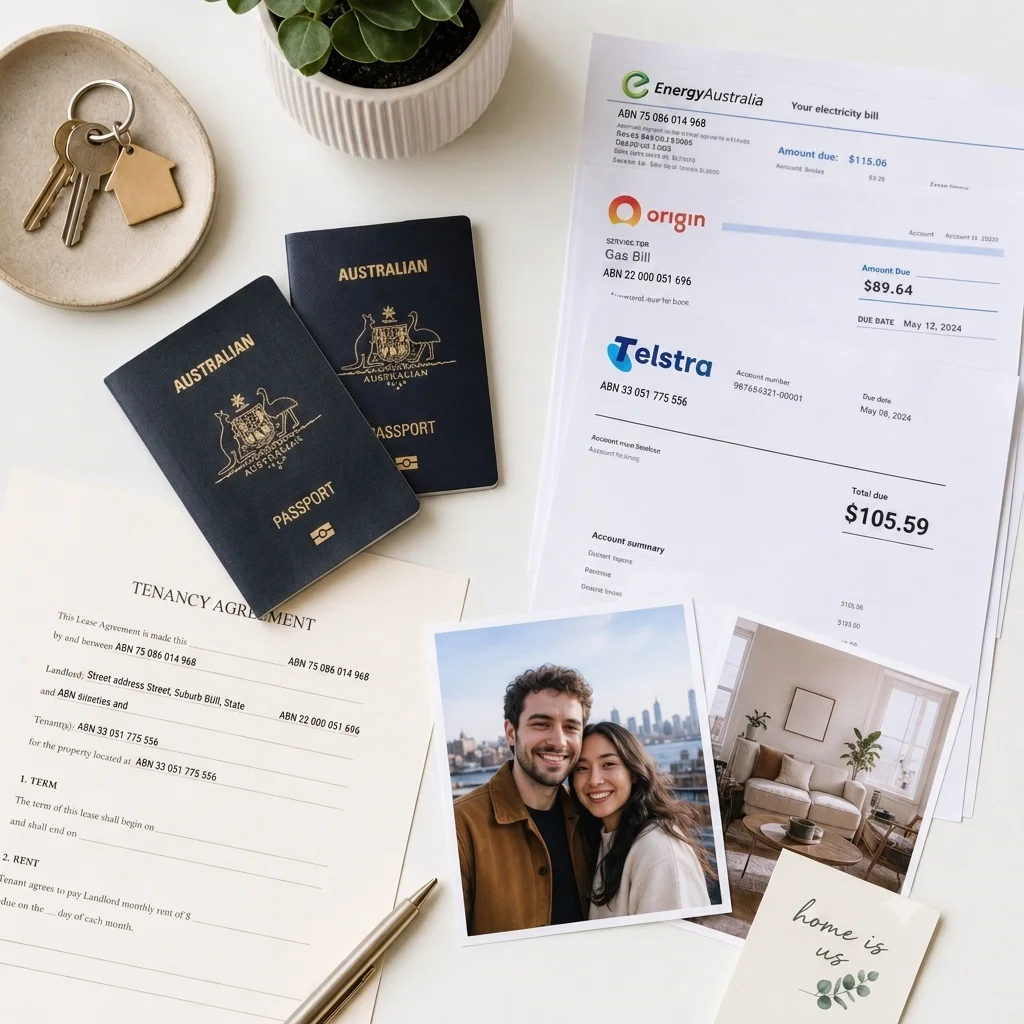
- Evidence You Need to Prove a Genuine De Facto Relationship
- Onshore vs Offshore: Subclass 820 and Subclass 309
- Comparing Your Partner Visa Pathway Options
- Step-by-Step Australian Partner Visa Application Process
- Common Mistakes That Get De Facto Applications Refused
- Frequently Asked Questions
Quick Takeaways
| Key Insight | Explanation |
|---|---|
| Marriage is not required | De facto partners can apply for the same Australian partner visa subclasses as married couples, including Subclass 820/801 (onshore) and 309/100 (offshore). |
| 12 months cohabitation is the standard rule | You must have lived together in a genuine de facto relationship for at least 12 months immediately before applying, with a narrow exception for registered relationships. |
| Four evidence categories must all be addressed | Home Affairs assesses financial, household, social, and commitment aspects. Missing even one category weakens your application significantly. |
| Processing times are long | As of 2026, the Subclass 820 onshore temporary stage takes around 16 to 27 months for 50-90% of applicants, according to Home Affairs data. |
| Partner visa eligibility extends to same-sex couples | Australia recognises same-sex de facto relationships for visa purposes. The legal framework has been in place since 2009 amendments to the Migration Regulations. |
| A registered relationship can waive the 12-month rule | If your relationship is registered under a state or territory law, you may apply without the 12-month cohabitation period. |
| Statutory declarations from third parties matter | Personal statements from friends or family who know you as a couple carry meaningful weight. Generic, vague declarations are frequently flagged by case officers. |
What Is a De Facto Partner Visa in Australia?
A de facto partner visa Australia grants a non-Australian citizen the right to live in Australia with their Australian citizen, Australian permanent resident, or eligible New Zealand citizen partner. The term “de facto” refers to a couple who lives together in a genuine, exclusive, and committed relationship without being legally married.
Under the Migration Act 1958 and the Migration Regulations 1994, de facto partners access the exact same visa subclasses as married couples. There is no separate “de facto visa.” De facto applicants apply under Subclass 309/100 (offshore) or Subclass 820/801 (onshore), depending on where they are located when they lodge.
In practice, the eligibility assessment for a de facto applicant is more document-intensive than for a married couple, simply because there is no marriage certificate to anchor the relationship. This makes the evidence-building phase the most important part of your entire application.
Eligibility Requirements for a De Facto Relationship Visa
To meet partner visa eligibility as a de facto couple, you must satisfy every criterion listed below. Meeting most of them is not enough. Home Affairs applies all conditions simultaneously.
Sponsor eligibility
Your sponsoring partner must be an Australian citizen, an Australian permanent resident, or an eligible New Zealand citizen. They must be at least 18 years old and must not have sponsored another partner visa applicant in the past five years unless an exemption applies. The sponsor must also not have been sponsored themselves as a partner applicant in the last five years.
Relationship eligibility
You and your partner must be in a genuine de facto relationship. Home Affairs defines this as a mutual commitment to a shared life to the exclusion of all others. The relationship must not be a family relationship, meaning you cannot be related by family, and both parties must be at least 18 years old.
12-month cohabitation requirement
You must have lived together for at least 12 continuous months immediately before lodging your application. The only way to bypass this requirement is if your relationship is formally registered under an Australian state or territory relationship register, or if you are in a de facto relationship with a person you intend to marry within the next nine months and you apply for a Prospective Marriage Visa (Subclass 300) instead.
Health and character requirements
All applicants must undergo an Australian immigration medical examination conducted by a panel physician. Character checks require police clearance certificates from every country where you have lived for 12 months or more in the past 10 years.
Pro tip: Book your immigration medical examination as early as possible. Results are valid for 12 months, and delays in health checks are one of the most common reasons timelines blow out.
The 12-Month Cohabitation Rule Explained
This rule is where most de facto applicants run into trouble. The 12 months must be immediately before the application is lodged, and they must reflect genuine cohabitation, not just being in the same city or country.
Home Affairs does allow for short separations. A case officer will consider whether the couple maintained their commitment during periods apart. However, prolonged or repeated separations in the 12-month window will invite scrutiny. You should document every period of separation with evidence of ongoing contact, for example, travel records, messages, and bank transfers.
What counts as cohabitation
Cohabitation means living together in the same household on a day-to-day basis. Sharing a residential address on a lease or utility bill helps, but it is not sufficient alone. Case officers look for evidence of a shared domestic life, including shared finances, shared responsibilities, and a shared social presence.
Registered relationships and the 12-month exemption
Australia has state and territory-level relationship registers that allow de facto couples to formally register their relationship. Registering in states such as Victoria, New South Wales, or Queensland removes the 12-month cohabitation requirement for partner visa purposes. This is a practical and often underused pathway for couples who have not yet lived together for a full year but can register their relationship beforehand.
“The genuineness of a de facto relationship is assessed holistically. No single piece of evidence is determinative. It is the totality of the evidence that matters.” - Department of Home Affairs, Partner Visa Policy Guidance
Evidence You Need to Prove a Genuine De Facto Relationship
Evidence is the foundation of a successful de facto relationship visa application. Home Affairs groups evidence into four categories, and you are expected to provide meaningful documentation under each one.
Financial aspects
Joint bank account statements, shared mortgage or lease agreements, joint credit cards, combined insurance policies, and evidence of shared financial responsibility such as joint utility bills. A single person listed on a lease with the other person sending rent transfers also qualifies if properly documented.
Nature of the household
Shared household responsibilities such as joint lease agreements listing both names, shared address on official documents, evidence of joint grocery spending or shared household purchases, and statements from housemates or neighbours confirming cohabitation.
Social aspects
Photographs showing the couple together across different occasions and locations over time, evidence of attending social events together, travel records showing joint travel, and being recognised as a couple by friends and family. Social media is increasingly used here, but print it and submit it as part of your physical evidence bundle rather than relying on a case officer to find it.
Commitment
Knowledge of each other’s personal circumstances, evidence of future plans together such as joint property purchases or shared assets, correspondence showing ongoing communication, and personal statements from each partner. These personal statements should be detailed, chronological, and specific. Avoid vague language about “loving each other deeply.” Write about how you met, how the relationship progressed, and how you currently live together.
Pro tip: Statutory declarations from friends or family who know you as a couple are weighted heavily. Ask people who can speak to specific events, shared household routines, or social occasions they attended with you both. Generic declarations saying “they seem happy together” are rarely useful.
Onshore vs Offshore: Subclass 820 and Subclass 309
Your location when you lodge the application determines which subclass you apply for. This choice has significant practical consequences.
Subclass 820/801: Onshore pathway
If you are in Australia on a valid visa when you apply, you apply for the Subclass 820 (temporary partner visa). Once granted, this allows you to live and work in Australia while your permanent Subclass 801 partner visa application is processed in the background. After two years from the application date, you are assessed for the permanent Subclass 801 grant. You must still be in a genuine relationship at that point.
Subclass 309/100: Offshore pathway
If you are outside Australia when you apply, you apply for the Subclass 309 (temporary) with a linked Subclass 100 (permanent). The Subclass 309 allows you to travel to and live in Australia once granted. After two years from the original lodgement date, you are assessed for permanent residence under Subclass 100. Processing for offshore applicants is conducted from Australia but the grant can be received offshore.
A common mistake is assuming that being onshore is always advantageous. If you are on a bridging visa or a short-stay visitor visa when you apply, your work rights and conditions depend on whether a bridging visa with full work rights is granted alongside your Subclass 820 application. This is not automatic and must be specifically requested or assessed.
Comparing Your Partner Visa Pathway Options
| Pathway | Who It Suits | Key Advantage |
|---|---|---|
| Subclass 820/801 (Onshore De Facto) | De facto partners currently in Australia on a valid visa | Bridging visa with work and travel rights granted at lodgement. You can remain in Australia throughout processing. |
| Subclass 309/100 (Offshore De Facto) | De facto partners living outside Australia | Both temporary and permanent stages are lodged together as one application, reducing future paperwork once processing is complete. |
| Registered Relationship (State-Level) + 820/801 | De facto couples who have not yet reached 12 months cohabitation | State or territory registration removes the 12-month cohabitation requirement, enabling earlier lodgement. |
Step-by-Step Australian Partner Visa Application Process
The Australian partner visa application process runs across multiple stages. Understanding each one prevents costly errors and missed deadlines.
Step 1: Confirm eligibility before you pay
The visa application charge for a Subclass 820 or 309 application is significant, ranging from approximately AUD11,710 for the primary applicant as of 2026. This fee is non-refundable if your application is refused. Confirm that you meet every eligibility criterion before paying.
Step 2: Gather and organise your evidence
Start collecting evidence at least six months before you plan to lodge. Retrieve bank statements, lease agreements, joint utility bills, and travel records. Arrange statutory declarations from at least two people who know you as a couple. Write your personal statements early and revise them with care.
Step 3: Complete the sponsor approval process
Your Australian partner must be approved as a sponsor. This is part of the same application process and involves a character check of the sponsor. The sponsor approval and visa application are lodged together via the ImmiAccount online portal.
Step 4: Lodge the application online
All partner visa applications are lodged through the Department of Home Affairs ImmiAccount system. Upload all documents as clear, legible PDF files. Poor scan quality or incorrectly named files are one of the most preventable causes of case officer delays.
Step 5: Attend the immigration medical examination
After lodgement, you will typically receive a health assessment request. Complete the examination at a Home Affairs-approved panel physician promptly. Results are submitted directly to Home Affairs by the clinic.
Step 6: Respond to any requests for further information
If a case officer issues a request for additional documents or information, you will have a strict deadline to respond. Missing this deadline can result in a refusal. Responses should be thorough and directly address what was requested.
Step 7: Two-year assessment for permanent residence
Approximately two years after your application lodgement date, Home Affairs will assess whether you still meet the criteria for the permanent stage. At this point, you must demonstrate that your de facto relationship is still genuine. Updated evidence is required.
Common Mistakes That Get De Facto Applications Refused
After reviewing hundreds of partner visa cases, the patterns in refused applications are consistent. These are the mistakes that matter most.
The first and most damaging mistake is submitting thin or generic evidence. Applicants who provide only one or two bank statements and a lease agreement are not meeting the evidentiary standard. Case officers need to see a sustained, detailed picture of shared life across all four evidence categories.
The second mistake is inconsistency between what the two partners write in their personal statements. If one partner writes that you moved in together in March 2022 and the other writes February 2022, a case officer will note this. Your statements do not need to be identical, but they should not contradict each other on material facts.
The third mistake is applying while in a visa status that does not permit you to remain in Australia lawfully after lodgement. Applying onshore on a visitor visa that expires shortly after lodgement is high-risk if your bridging visa conditions are restrictive. This requires careful planning with a registered migration agent.
The fourth mistake is underestimating the sponsor approval process. If the sponsor has a criminal record, has previously sponsored a partner visa applicant, or has been a sponsored partner themselves, additional requirements apply. These must be disclosed and addressed, not ignored.
Pro tip: At TerraOz Migration, one of the most impactful things we do for de facto clients is help them map their evidence timeline before lodgement. A simple chronological table showing when each piece of evidence was created and what it proves can transform a weak application into a compelling one.
Frequently Asked Questions
Can a de facto couple apply for an Australian partner visa without being registered?
Yes. Registration is not mandatory. A de facto couple that has lived together for at least 12 months can apply using the standard evidence framework covering financial, household, social, and commitment aspects. Registration only becomes relevant as an alternative pathway to bypass the 12-month requirement.
How long does a de facto partner visa take to process in Australia?
Processing times vary. As of 2026, the Department of Home Affairs reports that 50-90% of Subclass 820 onshore applications are finalised within 16 to 27 months. Subclass 309 offshore applications have similar timelines. These are not guaranteed and can be longer if additional information is requested.
Does a de facto relationship need to be sexual in nature to qualify?
Home Affairs does not require explicit evidence of a sexual relationship. What matters is that the couple lives together in a genuine, exclusive, committed partnership. The four evidence categories focus on shared financial life, household, social presence, and mutual commitment, not the intimate details of the relationship.
Can same-sex de facto partners apply for an Australian partner visa?
Yes. Australia has recognised same-sex de facto relationships for partner visa purposes since amendments to the Migration Regulations in 2009. Same-sex de facto couples apply under the same subclasses, meet the same criteria, and are assessed using the same evidentiary framework as opposite-sex couples.
What happens if we break up while the de facto visa application is being processed?
If the relationship genuinely ends during processing, the application will generally not proceed to a grant. Home Affairs assesses the relationship at the time of decision, not just at the time of lodgement. In limited circumstances, applicants who have experienced family violence may have access to special provisions that allow the visa to be granted even after a relationship breakdown.
Can I work in Australia while my Subclass 820 de facto partner visa is being processed?
Most applicants who lodge a Subclass 820 application onshore are granted a Bridging Visa A (BVA). The work conditions on the BVA depend on the visa you held when you applied. If your previous substantive visa included work rights, the BVA generally preserves them. If it did not, you may need to request work rights specifically, supported by financial hardship evidence.
Do children need to be included in the partner visa application?
If you have dependent children who are not Australian citizens or permanent residents, they should generally be included in your application as secondary applicants. Each secondary applicant pays an additional fee. Failing to include a dependent child in the application can create complications for their future migration options.
Have you started gathering evidence for your de facto partner visa application? Share your experience or questions in the comments below and let us know what part of the process has been most challenging for you.
References
- Australian Department of Home Affairs official immigration and visa information portal
- Australian Government Federal Register of Legislation including the Migration Act 1958 and Migration Regulations 1994
- Migration Agents Registration Authority official site covering registered migration agent standards and obligations
- Australian Bureau of Statistics data on migration, population, and family structure in Australia
- Statista global statistics and data on immigration trends and visa processing volumes