

Bridging Visa A Australia: Rights While Awaiting Partner Visa
Most partner visa applicants are surprised to learn they can stay, work, and access Medicare in Australia while the Department of Home Affairs processes their case, which routinely takes 16 to 27 months for an onshore subclass 820 application. The mechanism that makes this possible is the bridging visa A Australia grants automatically upon lodgment. Yet a significant portion of applicants either misunderstand its conditions, let it lapse, or fail to extend it before travelling, creating serious legal exposure. This article cuts through the confusion and gives you the factual, practical breakdown of every right and restriction that applies to you during the waiting period.
Table of Contents
- What Is a Bridging Visa A and When Is It Granted?
- Work Rights on a Bridging Visa A
- Travel Restrictions and How to Manage Them
- Healthcare and Medicare Access
- Bridging Visa A vs Other Bridging Visas: Comparison
- Conditions That Can Get Your BVA Cancelled
- Maintaining Your BVA While Your Subclass 820 Is Processed
- Frequently Asked Questions
- References
Quick Takeaways
| Key Insight | Explanation |
|---|---|
| Automatic grant upon lodgment | A Bridging Visa A is granted automatically when you lodge an onshore partner visa (subclass 820) application while holding a substantive visa. You do not apply for it separately. |
| Full work rights by default | Most BVA grants linked to a subclass 820 carry no work restrictions, meaning you can work in any occupation for any employer from day one. |
| No travel rights without a BVB | A Bridging Visa A does not allow you to re-enter Australia if you depart. You must apply for a Bridging Visa B before leaving, or your BVA ceases on departure. |
| Medicare eligibility for partner visa applicants | Applicants who have lodged a permanent residence visa application in Australia except Parent Visa and hold a Bridging Visa A may be eligible to enrol in Medicare, provided they meet the applicable eligibility requirements. |
| BVA ends when substantive visa is granted or refused | Once the subclass 820 is decided, the BVA ceases. If refused, you typically have 35 days to depart or lodge a valid review application within 28 days to obtain a new bridging visa. |
| A common mistake is confusing visa conditions | Applicants often assume the conditions of their previous substantive visa carry over. They do not. BVA conditions govern your stay from the moment the substantive visa expires. |
| The BVA does not accumulate unlawful time | Holding a valid BVA means you are lawfully in Australia. Unlawful presence only occurs if you remain after the BVA ceases without a valid visa in place. |
What Is a Bridging Visa A and When Is It Granted?
A Bridging Visa A (BVA) is a temporary visa that allows you to remain lawfully in Australia while the Department of Home Affairs assesses your substantive visa application. In the context of the partner visa bridging visa pathway, it bridges the gap between the expiry of your current substantive visa and the decision on your onshore subclass 820 application.
The BVA is granted automatically and simultaneously with the lodgment of your subclass 820 application. You do not fill out a separate form or pay a separate fee. The grant happens in the background of the Department’s systems, and you will see it reflected in your ImmiAccount dashboard, usually within a few business days of lodging.
One important point: the BVA only becomes active once your existing substantive visa expires. If your student visa or work visa still has 12 months of validity remaining when you lodge the 820, your BVA sits dormant until that substantive visa ends. During that transition period, your rights are governed by your existing visa, not the BVA.
What counts as a substantive visa for BVA eligibility?
To receive a BVA upon lodging an 820, you must be in Australia on a substantive visa at the time of application. Visitor visas, student visas, temporary skill shortage visas, and most other temporary visas all qualify. What does not qualify is being on an existing bridging visa yourself, in most circumstances. If you are already on a bridging visa when you try to lodge, the situation becomes legally complex and you should seek professional advice immediately.
Work Rights on a Bridging Visa A
Work rights Australia bridging visa is one of the most searched questions among partner visa applicants, and the answer for most people is straightforward: yes, you can work. The standard BVA granted alongside a subclass 820 application carries condition 8101 removed, which is the condition that prohibits work. This means there is no restriction on employment type, hours, or employer.
In practice, this is significant. Partner visa processing times currently run between 16 and 27 months for the subclass 820 stage. Being locked out of the workforce for that period would be financially devastating for most couples. The Department has, to its credit, designed the BVA to prevent that outcome in the partner visa context.
Study rights on a BVA
Study rights are equally unrestricted for BVA holders in the 820 pathway. You can enrol in university, vocational training, or any other educational institution without needing to hold a separate student visa. This is useful for applicants who were previously on student visas and wish to continue studying while their partner application is assessed.
What if your previous visa had work restrictions?
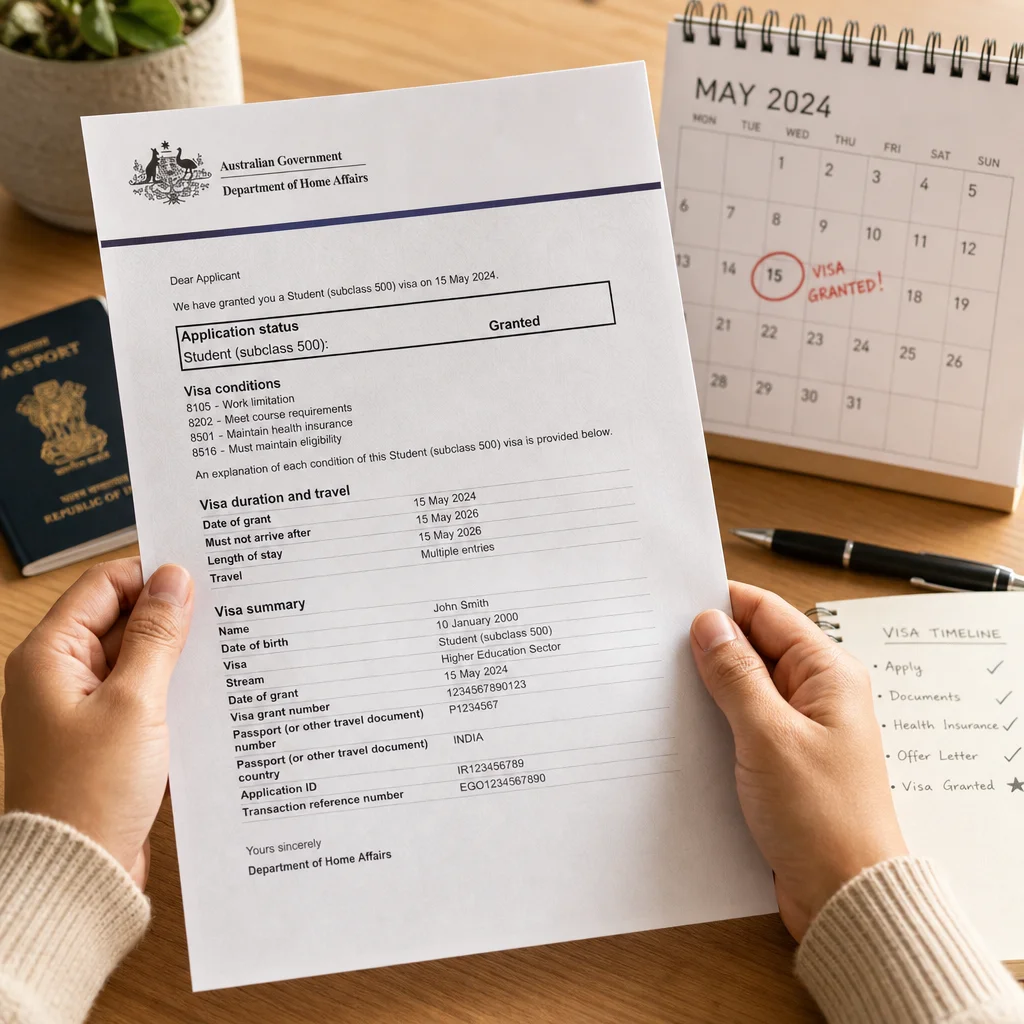
A common mistake is assuming that if your previous substantive visa restricted work, the BVA must also restrict it. That is not how it works. The BVA has its own conditions, which are listed in your visa grant letter. Always check your actual grant letter in ImmiAccount rather than relying on assumptions about what your old visa said.
Pro tip: Download your BVA grant letter from ImmiAccount as soon as the 820 is lodged. The specific conditions attached to your individual BVA are listed there. Do not rely on general information alone. Conditions can occasionally differ based on how the lodgment was processed.

Travel Restrictions and How to Manage Them
This is where most applicants get caught out. A subclass 820 bridging visa (BVA) does not permit re-entry into Australia if you leave. The moment you board a departing flight, your BVA ceases. You cannot re-enter on it. If you return without having obtained a Bridging Visa B (BVB) before leaving, you will need to hold another valid visa to board the plane back, or you will be refused entry.
The Bridging Visa B is applied for via ImmiAccount and typically requires you to demonstrate a compelling reason for travel. Visiting a seriously ill family member, attending a funeral, or conducting work that cannot be performed remotely are examples that are generally accepted. A holiday is not typically sufficient on its own, though it is not automatically refused either.
How to apply for a Bridging Visa B before travel
The BVB application is lodged online through ImmiAccount. There is an application fee. You should lodge it well before your travel date, ideally 2 to 4 weeks in advance during high-volume periods. The BVB will specify a return date by which you must be back in Australia. If you overstay that return date, the BVB ceases and your lawful status becomes uncertain.
If you leave Australia without a Bridging Visa B, your Bridging Visa A will cease upon departure. If you later return on a valid Visitor visa, you may be able to apply in Australia for a further Bridging Visa A associated with your pending subclass 820 application. Apply before the Visitor visa expires. If granted, the BVA will generally take effect once the Visitor visa ends.
Pro tip: Never book international travel after lodging your 820 without first checking your BVA conditions and applying for a BVB. Even a short trip across the Tasman to New Zealand will cause your BVA to cease if you have not secured a BVB beforehand.
“Bridging visa holders must ensure they hold a Bridging Visa B before departing Australia if they wish to return while their substantive visa application remains undecided.” - Department of Home Affairs, Australian Government guidance on bridging visas.
Healthcare and Medicare Access
Medicare eligibility while on a BVA is generally straightforward for applicants who have lodged an onshore permanent residence visa application, including a combined subclass 820/801 Partner visa application. These applicants may be eligible to enrol in Medicare while their application is being processed, regardless of nationality, provided they meet Services Australia’s requirements.
If the applicant’s current visa does not allow them to work, they must generally provide evidence of their family connection to an Australian citizen, Australian permanent resident, or New Zealand citizen living in Australia. Reciprocal Health Care Agreements may provide separate or limited access to Medicare for eligible visitors from particular countries, but they are not the primary basis for Medicare eligibility for most subclass 820/801 applicants.
Bridging Visa A vs Other Bridging Visas: Comparison
There are several types of bridging visas in the Australian immigration system. Understanding how the BVA compares to the Bridging Visa B and Bridging Visa C is essential for partner visa applicants making decisions about travel, employment, and compliance.
| Feature | Bridging Visa A (BVA) | Bridging Visa B (BVB) | Bridging Visa C (BVC) |
|---|---|---|---|
| How it is granted | Automatically with 820 lodgment | Must be applied for separately before travel | Granted when applying for a visa after becoming unlawful or applied visa while holding BVA |
| Travel permission | No re-entry rights. Ceases on departure. | Allows re-entry within a specified return date | No travel rights at all |
| Work rights | Generally unrestricted for 820 applicants | Mirrors the conditions of the underlying BVA | Usually restricted. No work rights by default. |
| When it ceases | On departure, or when substantive visa is granted or refused | On expiry of return date, or when substantive visa is decided | When substantive visa is decided or refused |
| Applicable to partner visa? | Yes, primary bridging visa for 820 applicants | Yes, essential for any international travel during processing | Rarely, only if applicant became unlawful or applied visa on BVA before lodging |
Conditions That Can Get Your BVA Cancelled
A BVA is not unconditional. The Department can cancel it if the underlying 820 application is found to be invalid, if you breach a visa condition, or if information provided in your application is found to be false or misleading. In practice, cancellations linked to the partner visa pathway most often arise from character grounds or from a determination that the relationship is not genuine.
Condition 8503, commonly called the “No Further Stay” condition, prevents a visa holder from applying for most further substantive visas while in Australia. It is not a standard condition of a Bridging Visa A issued in connection with a valid subclass 820 application.
The key issue arises before lodgement: if the applicant’s current or most recent substantive visa carries condition 8503-or another no-further-stay condition-they generally cannot lodge a valid onshore subclass 820 application unless the condition is waived. If a waiver request is refused, the applicant will generally need to consider an offshore Partner visa pathway or another available option.
Relationship breakdown during processing
If a relationship ends after a subclass 820 application is lodged but before a decision is made, the applicant should notify the Department promptly. The Bridging Visa A generally remains in effect while the subclass 820 application remains undecided, unless it ceases or is cancelled for another reason.
A relationship breakdown or withdrawal of sponsorship may lead to refusal of the subclass 820 application, unless the applicant can satisfy an exception-for example, family violence provisions, the death of the sponsor, or where the applicant and sponsor have a child together.
If the subclass 820 application is refused, the Bridging Visa A generally ceases 35 days after the Department makes the refusal decision. During that period, the applicant should obtain urgent advice about any review rights, another valid visa option, or arrangements to depart Australia. A valid merits-review application lodged within 28 days may support the grant of a further bridging visa while the review is pending.
Maintaining Your BVA While Your Subclass 820 Is Processed
There is no action required on your part to maintain the BVA during the processing period, provided you remain in Australia and do not breach any visa conditions. The BVA runs automatically until the 820 is decided. You do not need to renew it, extend it, or pay any further fees for it to remain active.
What you must do is respond promptly to any request for further information from the Department. If you fail to respond to a section 56 or section 57 request within the stipulated timeframe, the Department may make a decision on the information available, which often means refusal. A refusal triggers the cessation of the BVA within 35 days.
Keeping your contact details updated
The Department communicates with applicants via the ImmiAccount messaging system and by email. If your email address changes during the processing period and you do not update it in ImmiAccount, you can miss critical correspondence. A missed invitation to provide evidence can result in a decision made without your response. This is a preventable failure that the team at TerraOz Migration has seen derail otherwise strong applications.
From a compliance standpoint, maintaining a clean record during the BVA period also matters. Any criminal charge or conviction during the waiting period should be disclosed to your registered migration agent promptly. Character-based concerns raised during an ongoing partner visa assessment can affect both the 820 outcome and the continued validity of the BVA itself.
Pro tip: Set a calendar reminder every six months to check your ImmiAccount dashboard, confirm your email is current, and verify that your BVA is still listed as active. Also verify that your Australian sponsor has not changed their residential address without updating it in the sponsorship record, as discrepancies between applicant and sponsor details can trigger additional scrutiny.
Frequently Asked Questions
Can I work full-time on a Bridging Visa A while my partner visa is being processed?
Yes, in almost all cases. The BVA granted with a subclass 820 application does not carry a work restriction condition. You can work full-time, part-time, or casually for any employer in any industry. The exception would be if your specific BVA grant letter lists condition 8101, which is rare but possible in unusual lodgment circumstances. Always verify your individual grant letter in ImmiAccount rather than assuming.
What happens to my Bridging Visa A if my partner visa is refused?
If your subclass 820 application is refused, your BVA remains active for 35 days following the refusal decision. During that window, you can either depart Australia or lodge a valid review application with the Administrative Appeals Tribunal (AAT) within 28 days. If you lodge an AAT review, a new bridging visa is typically issued to cover you during the review process. If you do neither within the stipulated time period, you become unlawful.
I am currently on a BVA and want to visit my family overseas. What do I need to do?
You must apply for and be granted a Bridging Visa B before you depart. Apply through ImmiAccount with documentation supporting your reason for travel. Do not depart until the BVB is formally granted. If you leave on a BVA without a BVB in place, your BVA ceases at the border and you will not be able to re-enter Australia on it.
Does holding a Bridging Visa A affect my future permanent residency application?
No, time spent on a BVA in the context of the partner visa pathway does not negatively affect your permanent residency eligibility. The subclass 820 is the temporary stage of the partner visa. Once granted, you wait approximately two years before applying for or being assessed for the permanent subclass 801. Time on a BVA during the 820 processing stage is part of the normal pathway and does not create a gap or problem in your immigration history.
My previous visa had condition 8101 preventing work. Does that carry over to my Bridging Visa A?
No. The conditions on your previous substantive visa do not carry over to your BVA. Each visa has its own conditions listed in the grant notice. The BVA issued with an 820 application is a separate visa with its own set of conditions, and for the vast majority of 820 lodgments, condition 8101 is not imposed. Check your BVA grant letter in ImmiAccount to confirm your specific conditions.
Can my BVA be cancelled if my relationship ends?
The BVA itself is not automatically cancelled by a relationship breakdown, but the underlying 820 application it is bridging will almost certainly be refused if the sponsor withdraws from the process or if the Department concludes the relationship is no longer genuine. Once the 820 is refused, the BVA ceases within 35 days. The BVA’s survival is directly tied to the continued validity of the 820 application it supports.
Is there a fee to apply for a Bridging Visa B so I can travel while my 820 is pending?
Yes. There is an application fee for a Bridging Visa B when it is applied for in connection with a substantive visa application that is already lodged, including the subclass 820. The application is submitted through ImmiAccount. Processing times vary, so apply well before your intended departure date.
Have you had to navigate a Bridging Visa A situation during your partner visa process? Share your experience in the comments so others can learn from what you faced.
References
- Australian Department of Home Affairs: official source for bridging visa conditions, partner visa processing times, and immigration policy guidance
- Services Australia: Medicare eligibility rules for temporary visa and bridging visa holders, including reciprocal health care agreement information
- Migration Agents Registration Authority (MARA): register of legally authorised migration agents and consumer rights information for visa applicants in Australia
- Administrative Appeals Tribunal: review rights and process for partner visa refusals, including how a bridging visa is maintained during AAT review
- Statista: immigration and visa application data and statistics relevant to Australian partner visa processing volumes and timelines